Home / Household Bills / Electricity
Electricity: Choosing Providers, Compensation, and Savings in Australia
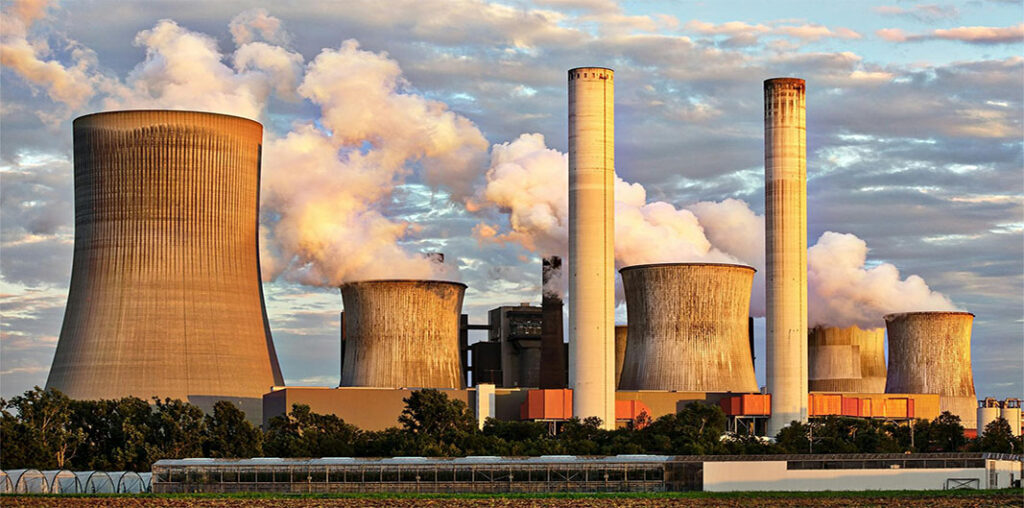
Electricity is an essential and often-overlooked part of daily life in Australia. While it’s a necessity for everyone, not all consumers have the option to switch providers. If you are in a position to change, consider taking advantage of competitive offers to save money.
Extended Power Outage Compensation Schemes
If you have experienced a prolonged power outage, you may be eligible for compensation. State and territory energy providers across Australia typically offer extended power outage compensation schemes to assist customers affected by such interruptions. If you believe you are entitled to compensation, it is recommended that you contact your energy provider directly to seek advice and determine your eligibility for available compensation options.
Switch and Save
The ability to choose from a range of electricity providers varies across Australia. In Western Australia, customers in the most populated areas have access to only one provider, Synergy, as reported by Canstar. However, in other states and territory’s where multiple providers are available, consumers can benefit financially by switching between companies, rather than remaining with the same provider for an extended period. Many energy providers offer incentives to attract new customers, which may include temporary discounts on bills, complimentary memberships to organisations, or other special benefits. Taking advantage of these introductory offers by switching providers can result in substantial savings over time.
The process of switching energy providers is generally straightforward. Most companies have simplified the procedure, and consumers can conveniently compare available plans and incentives online. Popular comparison websites such as Compare the Market, Service NSW, Canstar Blue, and Energy Made Easy make it easy to review options. Dedicating just 20 minutes to comparison shopping could lead to significant annual savings on your energy bills.
Bundle Your Plans
Depending on your location and the providers operating in your area, you may be able to achieve additional savings by bundling your gas and electricity services with a single provider. Using comparison tools such as Finder and Compare the Market can help you evaluate bundled plans and analyse the potential benefits. These resources provide clear outlines of the annual cost savings that may be realized by consolidating your services into a single plan.
State and Territory Comparison Resources
NSW, ACT, Queensland, South Australia, and Tasmania
Customers in New South Wales, the Australian Capital Territory, Queensland, South Australia, and Tasmania can use the Energy Made Easy service [source Service NSW] to compare electricity and gas prices. These states and territories have adopted the National Energy Customer Framework (NECF), which requires energy retailers to provide data for every plan made available to customers. As a result, residents can find and compare all available plans from all retailers, ensuring transparency and choice.
Victoria
The Victorian State Government offers a dedicated website, compare.energy.vic.gov.au, to help residents find the best energy deals for their needs. Additional comparison resources include websites such as Iselect and Compare the Market. Canstar Blue also provides a comprehensive comparison table that scores providers on factors like Overall Satisfaction, Value for Money, Customer Service, Bill and Cost Clarity, and more.
Northern Territory
According to Canstar, households and businesses in the Northern Territory, including Darwin, have access to five electricity retailers: EDL NGD, Jacana Energy, Next Business Energy, Power and Water Corporation (which acts as both distributor and retailer), and Rimfire Energy.
Some of these retailers are only available to business customers.
Western Australia
The most populated region of Western Australia, stretching from the southwest coast up to Kalbarri, is serviced by the South West Interconnected System (SWIS). Customers within the SWIS network are divided into two categories: Contestable and Non-contestable.
- Contestable: Customers living outside the SWIS are automatically classified as Contestable. However, in most regional areas, Horizon Power is typically the exclusive retailer.
- Non-contestable: Non-contestable customers within the SWIS do not have a choice of provider and are supplied by Synergy by default.
Solar electricity
According to Energy.gov.au “government subsidies, rebates and loan options that can help you pay for rooftop solar or an associated battery for your home or business
The Australian Government’s Small-scale Renewable Energy Scheme (SRES) reduces the cost of most new residential and business rooftop solar systems.
From 1 July 2025, the Australian Government’s Cheaper Home Batteries Program is providing around a 30% discount on the cost of installing a battery as part of an expansion to the SRES.
Rebates and loans are also provided by some state and territory governments and local councils.
Small-scale Renewable Energy Scheme (SRES)
The SRES is an Australian Government program based around tradable certificates called small-scale technology certificates (STCs).
Eligible installations of rooftop solar are entitled to STCs, creating a subsidy for households and businesses that install these renewable energy technologies. Most home and business rooftop solar systems in Australia qualify for STCs.
When you install or upgrade a rooftop solar system, you will receive a certain number of STCs. Your solar retailer or installer will normally apply for the STCs and sell them on your behalf. You will see the value of the STCs included in your quote as a discount on the cost of your solar system.
Eligibility
To be eligible for STCs, your system must be installed by a Solar Accreditation Australia accredited installer. The solar panels and inverter must be on the lists of Clean Energy Council approved modules and inverters.
The value of STCs you receive is based on the estimated amount of electricity your solar system will generate until 2030. This amount depends on:
- the size (kW) of your solar system (up to a maximum of 100 kW)
- the climate zone where the system is installed.
When you sign your contract with a solar retailer or accredited installer, you sign over ownership of the STCs in return for the discount. Learn more about choosing your solar retailer or installer”.